NORTHERN LIGHTS
The dance of solar wind in Earth’s atmosphere
What is the Northern Lights?
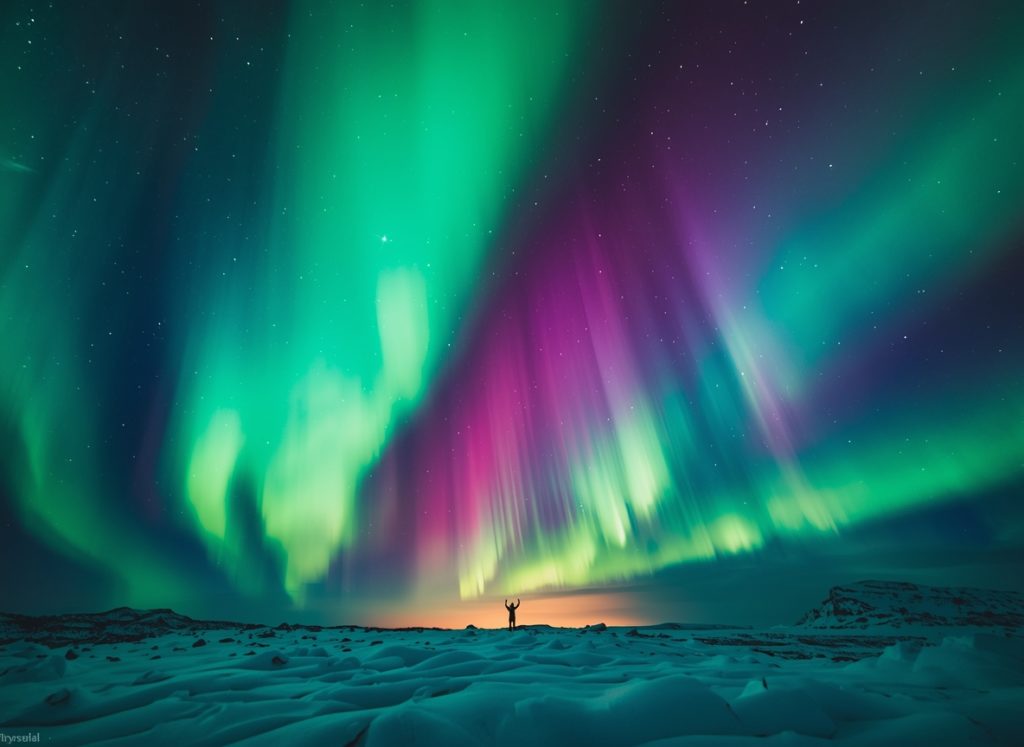
The Northern Lights (Aurora Borealis) is an amazing natural phenomenon that has fascinated people for centuries, giving rise to legends and myths. But today, science can explain how and why this celestial spectacle occurs.
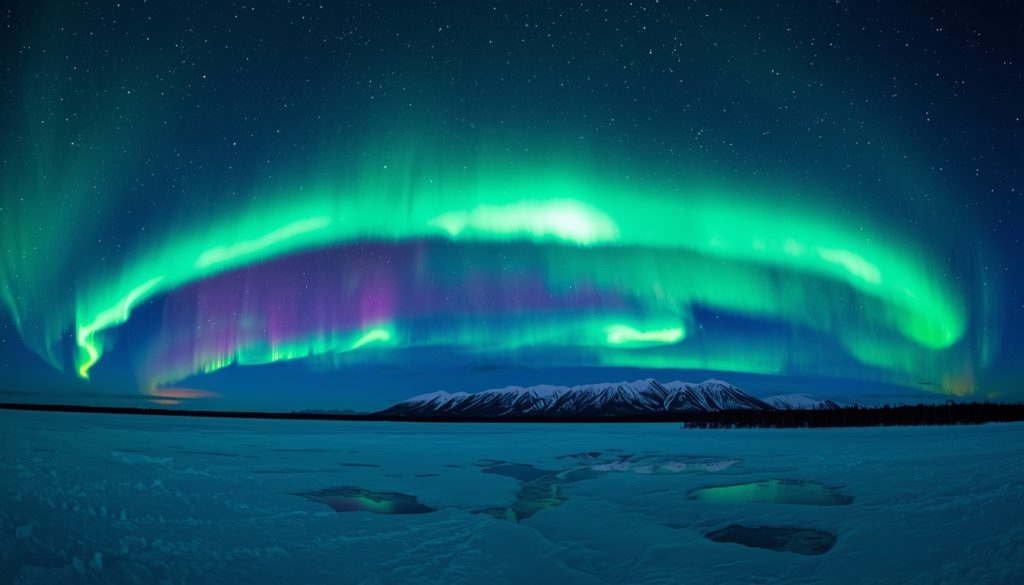
In essence, the aurora is a glow in the upper atmosphere caused by the collision of charged particles from the solar wind with atoms and molecules of gases (oxygen and nitrogen) at altitudes ranging from 90 to 800 kilometers.
What does the Northern Lights depend on?
☀️
Solar Activity
The aurora occurs due to solar flares. The higher the activity, the more intense and brighter the glow. The solar activity cycle lasts approximately 11 years.
🌍
Geomagnetic Conditions
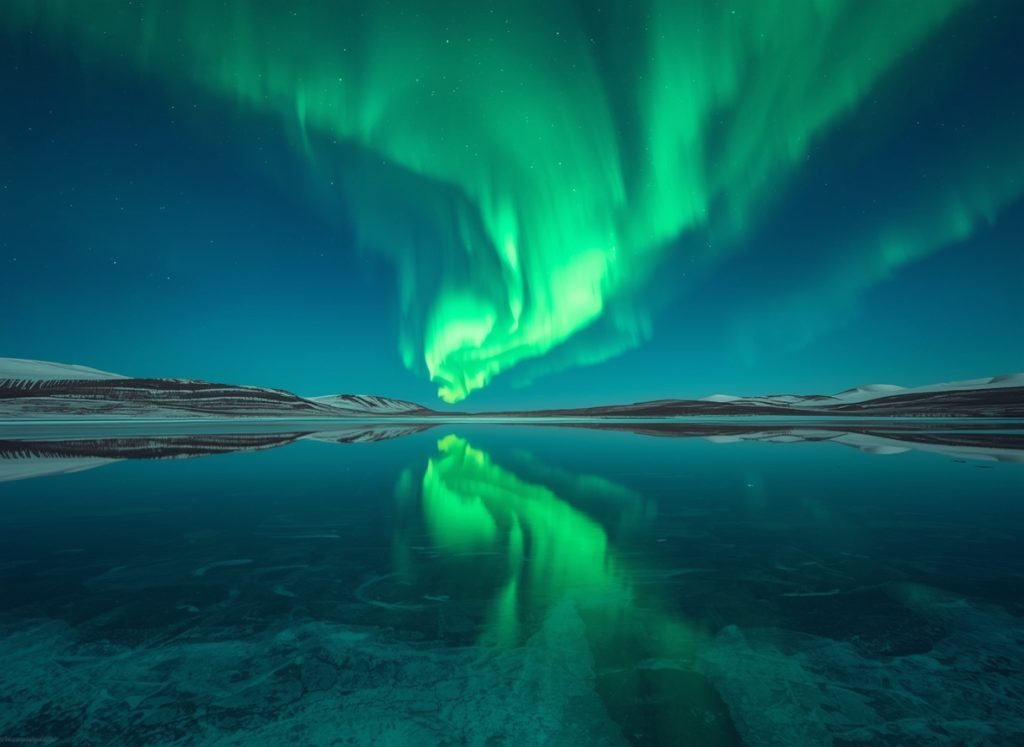
A geomagnetic storm is needed for the aurora to appear. A Kp index of 4 or higher means a good chance of seeing the aurora, even within the Arctic Circle.
☁️
Weather Conditions
The most important thing is a clear sky. Cloud cover completely hides the aurora. That’s why aurora hunters look for areas with minimal cloud cover.
How we hunt for the Northern Lights
A Professional Approach
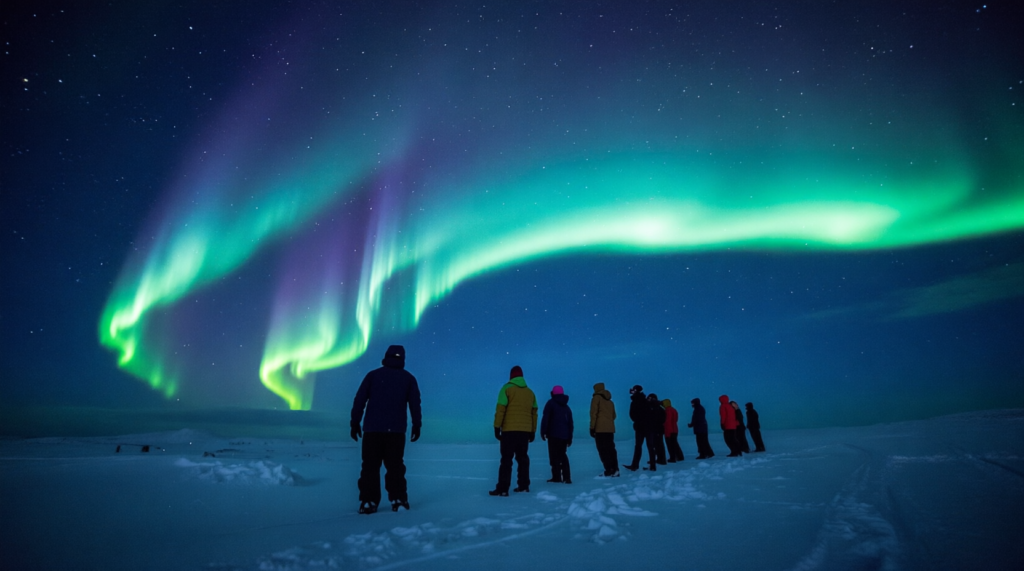
- Forecast Monitoring: We track solar activity, geomagnetic conditions, and cloud cover maps daily.
- Location Selection: We have 4 proven routes to go around the clouds and find clear skies.
- Experienced Guides: Our aurora hunters know where to find the lights even with moderate forecasts.
- Unlimited Time: We have no mileage limit and will keep searching until we find the aurora.
Interesting Facts
🎨
Color depends on the gas
Green glow comes from oxygen at 100-200 km altitude. Red comes from oxygen above 200 km. Purple and blue come from nitrogen.
🌌
Auroras exist beyond Earth
Auroras have been documented on Jupiter, Saturn, Uranus, and Neptune. They are hundreds of times more powerful than Earth’s.
📸
Cameras see more
Cameras capture more shades and brightness than the human eye. In photos, the aurora always looks more spectacular.
🔊
The sound of the aurora
Folklore mentions the aurora “crackling,” but this is scientifically unconfirmed. The aurora occurs too high for sound to reach the ground.
When and where to see it best
📅 Best time
- September-October — dark nights, not too cold yet
- November-February — peak season, longest nights
- March — high activity, still dark nights
- May-July — polar day, aurora not visible
📍 Best locations
- Teriberka — Barents Sea coast
- Khibiny Mountains — mountains and lakes
- Lovozero Tundras — far from city lights
- Kildin Island — island in the ocean
How to photograph the aurora
📷
Tripod
Essential, as you need a long exposure
⏱️
Shutter Speed
5-15 seconds, ISO 800-3200
🔭
Lens
Wide-angle, fast (f/2.8 or wider)
🔋
Spare Batteries
Batteries drain very quickly in the cold
Ready to go hunting?
We know all the secrets of a successful Northern Lights hunt. Join our tours and see this miracle with your own eyes!